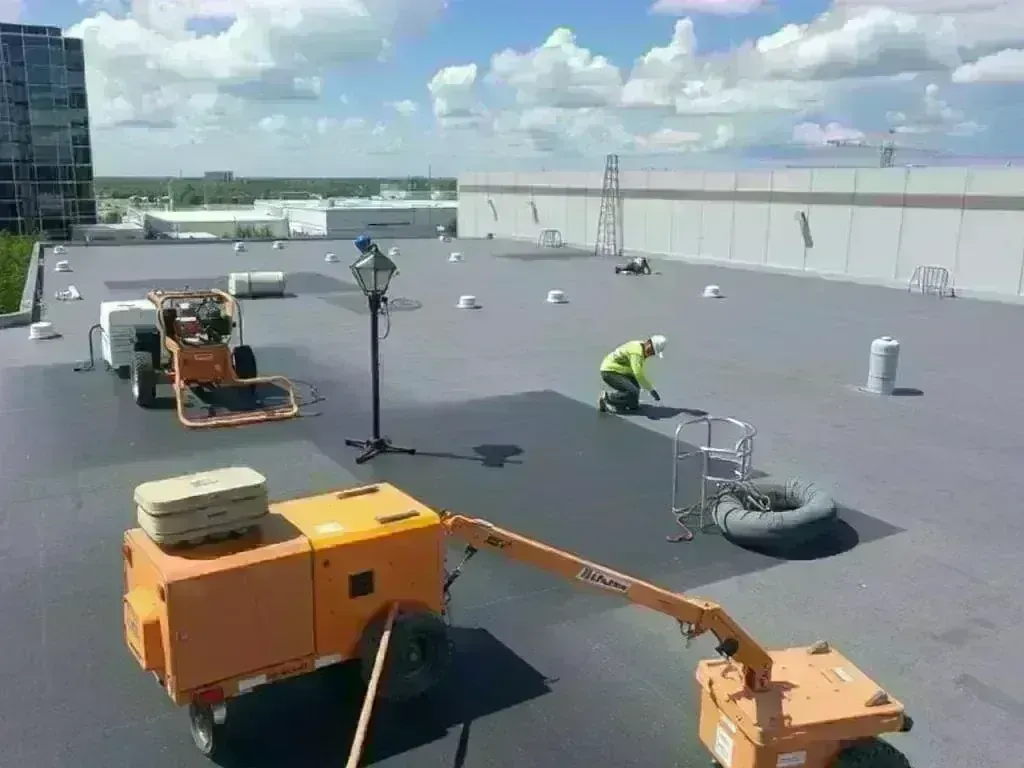
Roof coating is a liquid-applied system we roll or spray onto an aging rooftop to build a waterproof surface over what is already there.
Instead of a full tear-off, we clean and repair the substrate, then apply a primer so the new film bonds. Coverage rate depends on how rough the decking is and how many fasteners we reset.
Which Coating System Fits Your Roof
- Elastomeric coating stretches and returns to shape, so it bridges hairline cracks that open and close as temperatures swing.
- Silicone coating cures into a rubbery sheet that shrugs off ponding water and stays flexible through a Minnesota winter.
- Acrylic coating is a water-based elastomeric that handles UV well and costs less, but it needs dry weather to cure properly.
- Polyurethane coating adds hardness and impact resistance over walkways and service areas, usually as a top layer.
- A reflective topcoat bounces sunlight instead of absorbing it, which lowers the rooftop temperature and the cooling load underneath.
- Primer systems are matched to what is underneath, because a coating that cannot grip the substrate peels within a season.
- Reinforcing fabric laid into the wet base coat adds tensile strength across seams, blisters, and old patch repairs.
Heavy snowfall and ice dams hold meltwater against the surface for weeks, and rapid freeze-thaw cycles open seams the way they crack pavement. Hailstorms in late spring can bruise a coating that has not finished curing.
Cure time runs longer in October than in July, so we schedule around the forecast. UV degradation is what ages a coating first, and blistering shows up when moisture under the membrane pushes through the film.
A reflective finish cuts rooftop surface temperature in August, and one recoat handles waterproofing and weatherproofing over an otherwise sound roof.
Silicone coatings from GAF Unisil and acrylic elastomerics from Henry are the two systems we price most often, and each has a different cure window.
What We Inspect and Repair Before Any Coating Goes Down
- Roof deck, plywood, OSB, and sheathing get probed for soft spots and delaminated plies, because coating over rot wastes the job.
- Synthetic underlayment and roofing felt are checked at the eave, where torn felt lets water wick into the deck.
- Ice-and-water shield protects the eave line, and we look for gaps wherever an ice dam has pushed water sideways.
- Drip edge, fascia, and soffit show whether water has been running behind the trim for years.
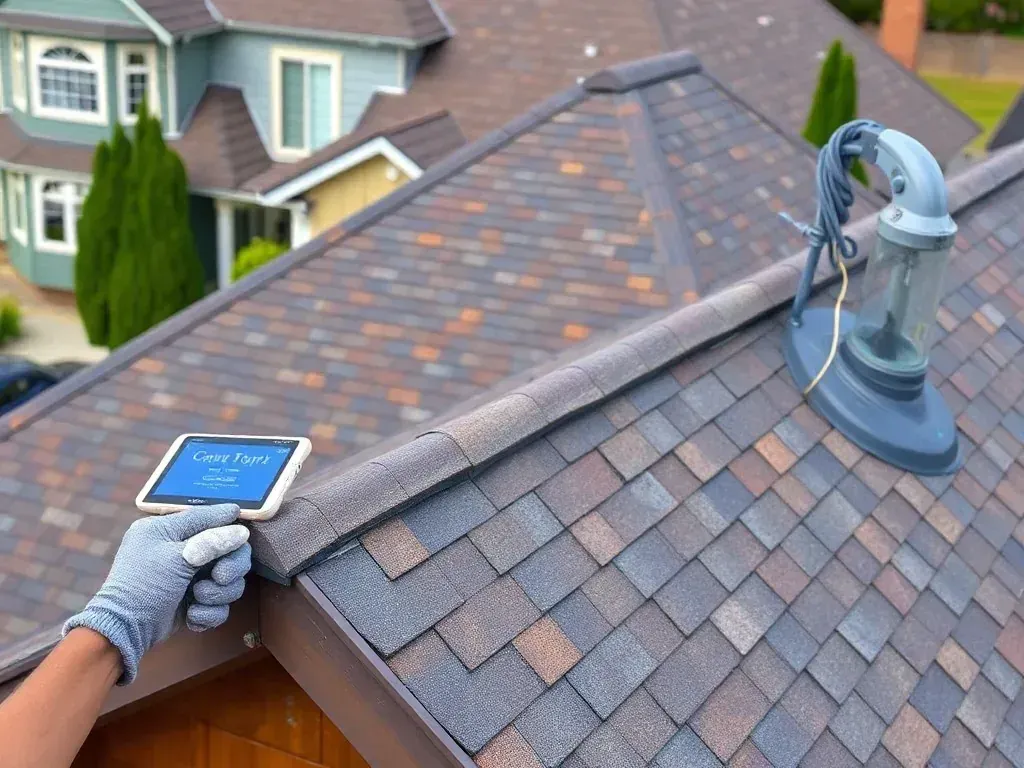
- Rake edges, ridge, ridge cap, and ridge vent get checked for loose fasteners and open laps.
- Hip, gable, and verge transitions are where two planes meet, and bad weaving there leaks into the field course.
- Valley and step flashing carry the most water, so a failed seam there gets cut out and replaced, not coated over.
- Counter-flashing and chimney flashing get resealed with a sealant rated for masonry, not a thin caulk.
- Pipe flashing, pipe boot, and vent boot seals crack under UV exposure and are the cheapest leaks to catch early.
- Skylight and dormer curbs collect debris, so we clear the head flashing and reset the adhesive joints.
- Parapet walls and coping hold water against the edge, and a clogged scupper turns that into ponding.
- Gutter and downspout runs are cleared, because a full gutter backs water under the drip edge and into the fascia.
- Decking, purlin, batten, and counterbatten on metal systems tell us whether a recoat will hold its fasteners.
- Truss, rafter, joist, and ridge beam framing is checked from the attic side for sag and old water staining.
- Insulation, ventilation, soffit vents, and attic fan performance matter, since a hot attic bakes a coating from below.
- A vapor barrier installed face-down traps moisture in the deck, so we note it for your attic contractor.
Flat and Low-Slope Surfaces We Recoat
- TPO, EPDM, and PVC membrane roofs take a recoat when the sheet is sound but the surface has chalked and oxidized.
- Built-up roof and modified bitumen surfaces, which are layers of felt and asphalt, take silicone once we strip loose gravel and tar.
- Metal panel, standing-seam panel, and corrugated panel roofs get coated along the seams, where old pitch and fasteners leak.
- Ballasted or gravel roofs need the stone removed first, because coating will not bond to loose material.
The Roof Coating Process, Step by Step
- Roof inspection and roof estimate: we walk the roof, measure it, and hand you a written line-item estimate with a square count.
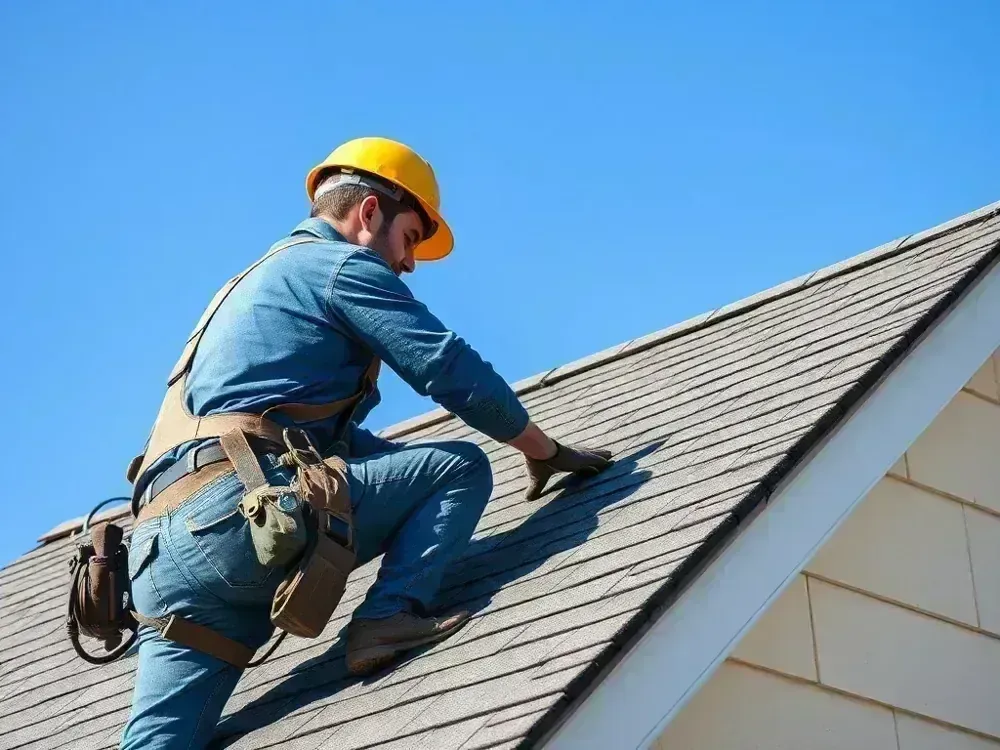
- Protection: scaffold, ladder, and safety harness go up, and a dumpster sits below for debris we pull off the surface.
- Preparation: the crew uses a pry bar, roofing shovel, and roofing square to strip failed material, then a nail gun and air compressor refasten the deck with ring-shank nails.
- Repairs: we reset or replace every overdriven nail and screw, then hand-seal the joints with mastic and roof cement.
- Primer: a primer matched to the substrate goes down and has to be dry before the first coating pass.
- Coating: a base coat goes on by roller or airless sprayer, then a topcoat, and no torch touches a coated surface.
- Cure: cure time depends on temperature and humidity, and we tell you when the roof can be walked on again.
When Roof Coating Is the Wrong Answer
Coating is the wrong call when the deck has gone soft, when a quarter of the surface is already patched, or when the roof is steep-slope. Any roofer who says otherwise is selling a recoat that fails within two winters.
- Three-tab shingle, asphalt shingle, and architectural shingle roofs are usually replaced, since granule loss means the mat is spent.
- Wood shake and cedar shake hold moisture, so a coating locks water in and speeds decay instead of stopping it.
- Slate, clay tile, and concrete tile roofs are repaired in place and rarely need a coating at all.
- Tar paper and old roofing felt under a failing shingle field cannot be saved by anything applied on top.
Mansard and gambrel rooflines shed water fast on their steep sections, while a canopy or awning overhang traps debris against the wall. We clean those pockets at every roof condition survey.
Where the local building code requires a permit for the work, we pull it before the first bucket comes off the truck. Call 612-979-0693 for a free estimate, and we will tell you straight whether a recoat is worth it.